
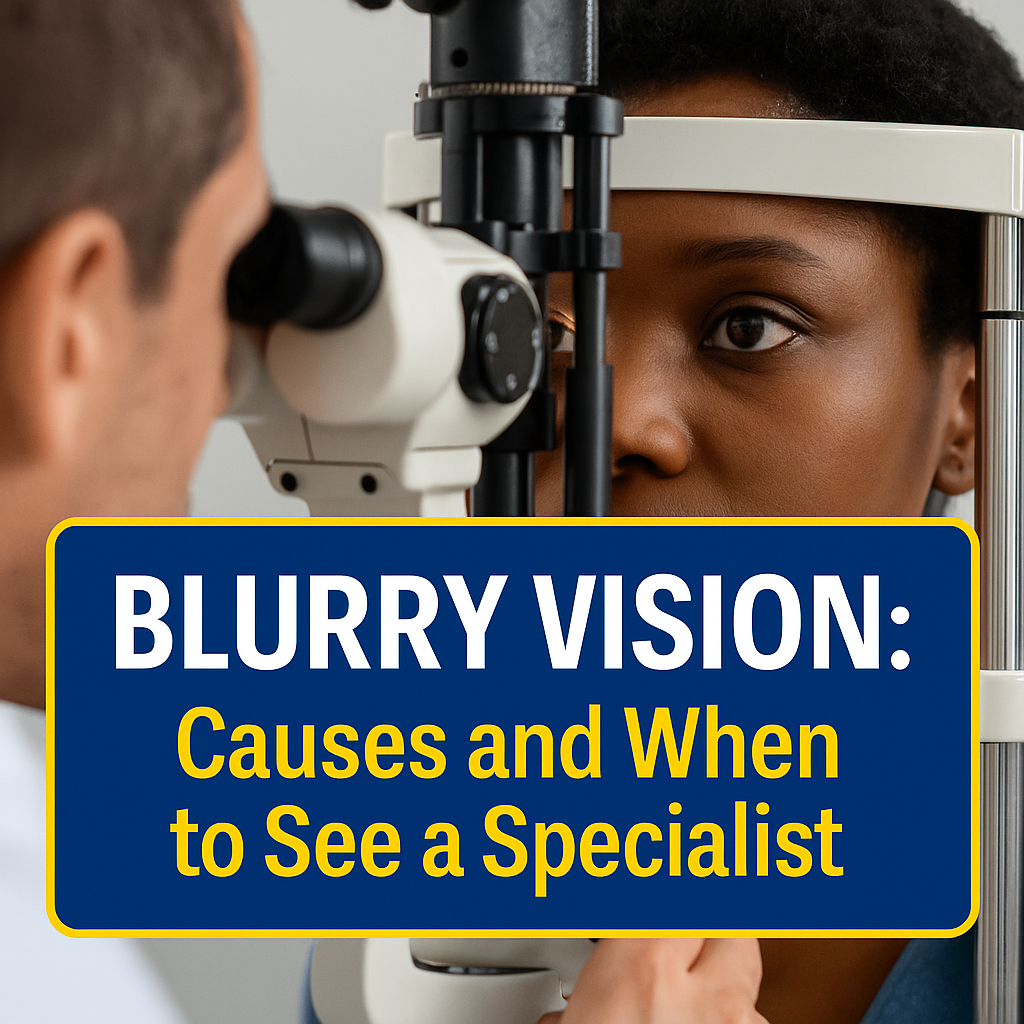
Few symptoms are as unsettling as blurry vision. Whether it comes on suddenly while driving at night or creeps in gradually as you struggle to read fine print, blurred eyesight is often more than an inconvenience. It can be a signal from your body that your eyes—or even your overall health—need urgent attention.
Unfortunately, many people dismiss blurry vision as “just needing new glasses” or blame it on fatigue. While it’s true that refractive errors (like nearsightedness or farsightedness) are common causes, there are times when blurry vision is a red flag for serious medical conditions such as glaucoma, diabetes, or retinal disease.
This article will give you a comprehensive look at what causes blurry vision, how to identify when it’s harmless versus dangerous, and why consulting a specialist is the safest course of action.
Common Causes of Blurry Vision
Blurry vision can arise from many conditions, some minor and easily corrected, others requiring urgent medical intervention. Let’s break them down into categories.
1. Refractive Errors (Most Common Cause)
Refractive errors occur when light entering the eye is not focused properly on the retina. These include:
- Myopia (Nearsightedness): Difficulty seeing distant objects.
- Hyperopia (Farsightedness): Trouble focusing on near objects.
- Astigmatism: Blurred vision at all distances due to irregular corneal shape.
- Presbyopia: Age-related difficulty with near vision, usually beginning after age 40.
These conditions typically develop gradually, and blurry vision is corrected with glasses, contact lenses, or refractive surgery.
2. Dry Eyes
When the eyes don’t produce enough tears or the tears evaporate too quickly, the cornea becomes dry and irritated, leading to fluctuating blurry vision. Prolonged screen use, aging, or living in dry climates makes this worse.
3. Digital Eye Strain (Computer Vision Syndrome)
Spending long hours on screens can cause temporary blurry vision, eye fatigue, and headaches. This happens because blinking decreases by up to 60% when focusing on screens, leading to dry eyes and strain.
4. Eye Infections
Conditions such as conjunctivitis (pink eye) or keratitis (corneal infection) can cloud the cornea, producing blurred or hazy vision. These infections may also cause redness, discharge, or light sensitivity.
5. Cataracts
A cataract is the clouding of the eye’s natural lens. It often develops gradually, making vision blurry, dim, or yellowish. It is common in older adults and requires surgery once it interferes with daily life.
6. Glaucoma
Glaucoma damages the optic nerve, usually due to high eye pressure. Early stages may cause subtle blurry vision or blind spots. If untreated, it can progress to irreversible vision loss.
7. Diabetic Retinopathy
In people with diabetes, high blood sugar damages blood vessels in the retina, leading to blurry vision, floaters, or vision loss. Regular eye exams are critical for early detection.
8. Macular Degeneration
Age-related macular degeneration (AMD) damages the central retina (macula), causing blurred or distorted central vision. This is a leading cause of blindness in older adults.
9. Neurological Causes
Sometimes, blurry vision has nothing to do with the eyes themselves but with the brain. Stroke, migraines with aura, or multiple sclerosis can all cause sudden changes in vision.
10. Medications and Systemic Illnesses
Some medications (like antihistamines or blood pressure drugs) cause temporary blurriness. Systemic conditions like hypertension and autoimmune diseases can also affect eye clarity.
When Blurry Vision Is an Emergency
Blurry vision isn’t always urgent, but certain warning signs mean you should see a specialist immediately:
- Sudden onset of blurry vision in one or both eyes
- Blurred vision with eye pain, redness, or halos around lights
- Blurry vision accompanied by headache, nausea, or weakness
- Flashes of light, floaters, or sudden loss of part of your vision field
- Blurry vision in someone with diabetes or hypertension
These could indicate stroke, retinal detachment, acute glaucoma, or diabetic complications—all of which require urgent attention to prevent permanent damage.
Diagnosis: What to Expect at the Specialist’s Office
When you visit an optometrist or ophthalmologist for blurry vision, here’s what usually happens:
- History Taking – The doctor asks about onset, duration, associated symptoms, medications, and health conditions.
- Visual Acuity Test – Standard eye chart to assess sharpness.
- Refraction – Determines if refractive error is the cause.
- Slit Lamp Exam – Examines cornea, lens, and anterior structures.
- Tonometry – Measures eye pressure (for glaucoma).
- Retinal Examination (Fundoscopy or OCT) – Evaluates retina and optic nerve.
- Blood Sugar/BP Checks – If systemic diseases are suspected.
Treatment Options for Blurry Vision
Treatment depends on the underlying cause:
- Refractive errors: Glasses, contact lenses, LASIK or PRK.
- Dry eyes: Artificial tears, punctal plugs, lifestyle changes.
- Digital strain: 20-20-20 rule, ergonomic adjustments, blue light filters.
- Cataracts: Surgery with an intraocular lens implant.
- Glaucoma: Eye drops, laser therapy, or surgery.
- Diabetic retinopathy: Blood sugar control, laser therapy, anti-VEGF injections.
- Infections: Antibiotic or antiviral eye drops.
- Neurological causes: Referral to a neurologist for systemic management.
Preventing Blurry Vision
Not all causes of blurry vision are preventable, but several lifestyle practices reduce the risk:
- Regular Eye Exams – Adults over 40 should have comprehensive exams every 1–2 years.
- Control Chronic Illnesses – Diabetes and hypertension must be properly managed.
- Protective Eyewear – Sunglasses and safety glasses prevent UV and trauma damage.
- Digital Hygiene – Follow the 20-20-20 rule: every 20 minutes, look at something 20 feet away for 20 seconds.
- Balanced Diet – Rich in vitamin A, omega-3s, and antioxidants for eye health.
- Avoid Self-Medication – Random eye drops, especially steroid-based ones, can worsen problems.
Patient Stories (Relatable Examples)
- Ngozi, a 45-year-old banker in Lagos, Thought she just needed stronger glasses. After a thorough exam, she was diagnosed with early glaucoma. Timely treatment preserved her vision.
- Chinedu, a 32-year-old IT worker: Struggled with on-and-off blurry vision. His doctor identified severe digital eye strain and prescribed artificial tears plus ergonomic corrections.
- Mrs. Adebayo, a 60-year-old retiree: Ignored cloudy vision until driving at night became dangerous. A cataract diagnosis led to successful surgery and clear vision restored.
These real-life scenarios show why ignoring blurry vision can be dangerous and why specialist care is key.
Bottom Line: When to See a Specialist
Blurry vision can range from a simple need for new glasses to a sign of a life-threatening disease. Never ignore sudden or worsening blurriness. If you experience accompanying pain, headache, flashes, or have conditions like diabetes, see an eye doctor immediately.
Specialists in Lagos—like Vision Planet Eye Clinic, Eye Foundation, Skipper Eye-Q, and others—are well equipped to provide comprehensive assessments. Regular checkups, proper diagnosis, and early treatment can preserve your eyesight and protect your quality of life.