
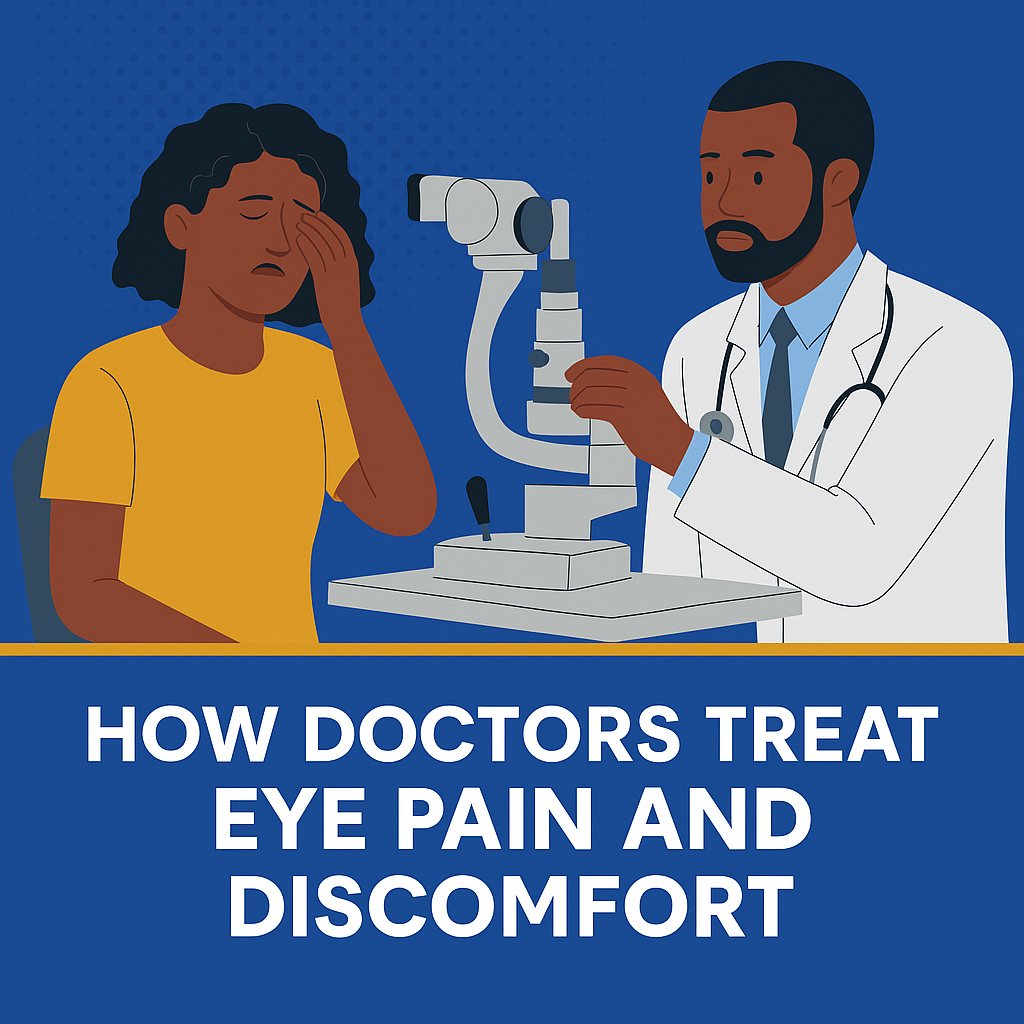
Most of us have experienced eye discomfort at one time or another—whether from staring at screens too long, rubbing our eyes during allergy season, or waking up with a gritty sensation after a sleepless night. While some causes of eye pain and discomfort are temporary and harmless, others may signal more serious underlying conditions.
Doctors emphasise that because the eyes are extremely sensitive organs, any pain should be taken seriously. Unlike pain in other body parts, eye pain can quickly escalate into vision loss if neglected. This article explains how doctors evaluate, diagnose, and treat eye pain—helping you know what to expect if you visit a clinic.
Common Causes of Eye Pain and Discomfort
Understanding what causes eye pain is the first step toward proper treatment. Doctors usually categorize causes into external/ocular surface problems and internal/structural issues.
External Causes (Surface-Related)
- Dry Eyes: Reduced tear production or poor tear quality leads to burning, gritty discomfort.
- Allergies: Itchy, watery, painful eyes triggered by dust, pollen, or pet dander.
- Conjunctivitis (Pink Eye): Infection or inflammation of the conjunctiva causing redness, discharge, and irritation.
- Foreign Body in the Eye: Dust, sand, or eyelashes can scratch the cornea, leading to sharp pain.
- Contact Lens Complications: Overwear, poor hygiene, or ill-fitting lenses can cause infection and pain.
Internal Causes (Deeper Conditions)
- Corneal Abrasions/Ulcers: Scratches or open sores on the cornea cause severe pain, light sensitivity, and blurred vision.
- Glaucoma: Especially in acute cases, increased intraocular pressure can cause intense eye pain, headache, and nausea.
- Uveitis: Inflammation inside the eye causing deep pain and blurred vision.
- Optic Neuritis: Pain worsens with eye movement and is often linked to systemic conditions like multiple sclerosis.
- Sinus Infections: Can radiate pain around the eyes, mimicking eye pain.
How Doctors Diagnose Eye Pain
When a patient presents with eye pain, doctors follow a stepwise approach:
- History Taking
- When did the pain start?
- Was it sudden or gradual?
- Is it sharp, burning, or dull?
- Any associated symptoms (redness, blurred vision, discharge, headache)?
- Do you wear contacts or glasses?
- Physical Examination
- Visual Acuity Test: To check for reduced vision.
- Slit-Lamp Exam: Magnified view of the eye to detect abrasions, ulcers, or inflammation.
- Fluorescein Staining: Special dye highlights corneal scratches or foreign bodies.
- Tonometry: Measures eye pressure (critical for diagnosing glaucoma).
- Dilated Fundus Exam: Allows inspection of the retina and optic nerve.
- Laboratory or Imaging Tests (if needed)
- Swabs for bacterial/viral cultures in conjunctivitis.
- OCT (Optical Coherence Tomography) for optic nerve issues.
- MRI/CT scans if neurological causes are suspected.
Treatment Approaches for Eye Pain and Discomfort
1. Dry Eyes
- Artificial Tears: Over-the-counter or prescription eye drops.
- Punctal Plugs: To slow tear drainage.
- Lifestyle Advice: Humidifiers, reducing screen time, 20-20-20 rule.
2. Eye Allergies
- Antihistamine Eye Drops: Relieve itching and swelling.
- Cold Compresses: Reduce discomfort.
- Avoiding Triggers: Dust-proof bedding, sunglasses outdoors.
3. Conjunctivitis (Pink Eye)
- Bacterial: Antibiotic eye drops/ointments.
- Viral: Supportive care; artificial tears and hygiene.
- Allergic: Antihistamine drops and avoiding allergens.
4. Foreign Bodies in the Eye
- Irrigation: Doctors flush the eye with sterile saline.
- Removal with Instruments: Using cotton swabs, spuds, or specialized tools.
- Antibiotic Drops: To prevent infection afterward.
5. Contact Lens Complications
- Temporary Cessation: Stop wearing contacts until healing.
- Medicated Drops: Antibiotics or anti-inflammatories as needed.
- Education: Proper cleaning and wearing schedules.
6. Corneal Abrasions/Ulcers
- Antibiotic Drops: To prevent infection.
- Pain Relief Drops: Sometimes cycloplegic drops to relax eye muscles.
- Urgent Follow-Up: Ulcers require close monitoring due to blindness risk.
7. Glaucoma
- Medicated Eye Drops: To lower eye pressure (e.g., prostaglandins, beta-blockers).
- Laser Therapy or Surgery: In resistant cases.
- Lifelong Monitoring: Regular pressure checks are essential.
8. Uveitis
- Steroid Eye Drops: To reduce inflammation.
- Immunosuppressive Therapy: In systemic autoimmune conditions.
- Close Monitoring: To prevent complications like glaucoma or cataracts.
9. Optic Neuritis/Neurological Causes
- Corticosteroids: Oral or IV to reduce nerve inflammation.
- Systemic Disease Management: Referral to neurologists if linked to multiple sclerosis or other disorders.
Home Remedies vs Professional Care
Many patients initially attempt self-care—using over-the-counter eye drops, cold compresses, or resting. While this can help with mild discomfort like allergies or dryness, self-treatment is dangerous if:
- Pain is severe or sudden.
- Vision is blurred or lost.
- There’s discharge, halos, or light flashes.
- The eye has sustained trauma.
Doctors caution against using steroid-based eye drops without supervision, as they can worsen infections and mask serious conditions.
Prevention of Eye Pain and Discomfort
- Maintain Screen Hygiene: Follow the 20-20-20 rule.
- Wear Sunglasses: Protect against UV light.
- Practice Contact Lens Hygiene: Clean properly, never overwear.
- Stay Hydrated: Proper hydration supports tear production.
- Schedule Regular Eye Exams: Early detection saves vision.
- Avoid Rubbing Eyes: Especially when foreign bodies are suspected.
When to See a Specialist
Doctors recommend immediate consultation if:
- Pain comes on suddenly.
- There’s vision loss or blurred vision.
- The eye looks red and swollen with discharge.
- Pain worsens with light exposure.
- You have diabetes or high blood pressure and develop new eye pain.
Delaying care can mean the difference between temporary discomfort and permanent vision loss.
Patient Experiences (Relatable Insights)
- Tosin, a 29-year-old software engineer: Experienced stabbing eye pain after wearing contacts too long. Diagnosis: corneal ulcer. With antibiotics and strict follow-up, his vision was saved.
- Mrs. Bello, 52: Ignored gradual eye pain until it was accompanied by headaches. She was diagnosed with open-angle glaucoma and now manages it with drops.
- Chika, 18: Suffered from itchy, painful eyes every harmattan season. Her doctor prescribed antihistamine drops and lifestyle changes, which gave her relief.
These examples show how early diagnosis and appropriate treatment make all the difference.
Bottom Line
Eye pain and discomfort are not symptoms to ignore. While some causes are minor and easily treatable, others signal serious conditions requiring urgent medical attention. Doctors use a range of diagnostic tools and treatments—from artificial tears and antihistamines to surgical interventions—depending on the underlying cause.
The best advice is simple: never self-diagnose persistent or severe eye pain. Schedule a consultation with a qualified optometrist or ophthalmologist. Clinics like Vision Planet Eye Clinic, Eye Foundation, and other top-rated facilities in Lagos are equipped to evaluate, treat, and protect your eyes.
Protecting your vision today means securing your quality of life for tomorrow.