
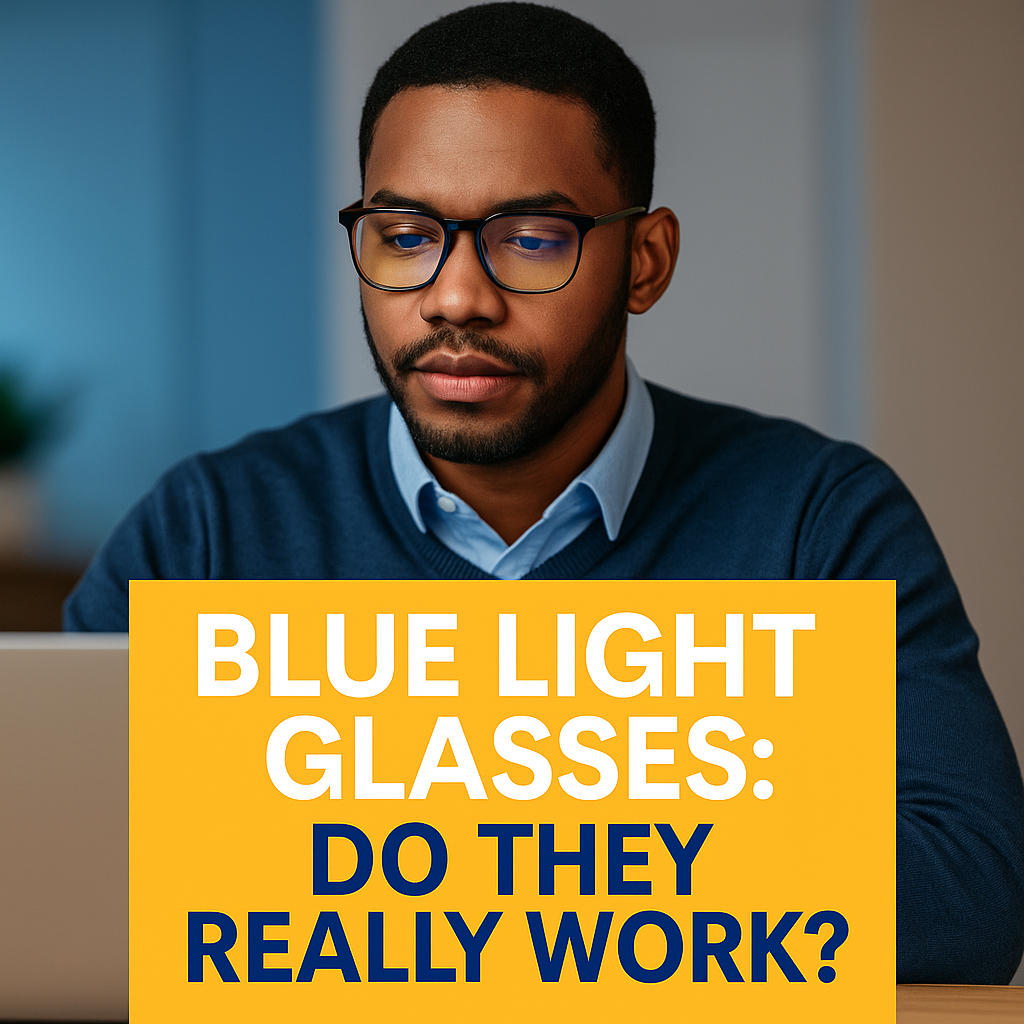
With the average adult spending more than 7–10 hours daily on screens, it’s no surprise that blue light has become a hot topic. The idea behind blue light glasses is straightforward: digital screens emit high-energy visible (HEV) light—particularly in the blue spectrum (400–500 nm). This wavelength has more energy than other visible light and has been implicated in two main concerns:
- Eye strain and fatigue — Many people believe blue light contributes directly to burning, tired eyes after long screen sessions.
- Sleep disruption — Blue light exposure in the evening can suppress melatonin, the hormone that regulates sleep cycles, potentially causing delayed sleep or poor sleep quality.
Marketers seized on these findings, offering blue light glasses as a convenient fix. But what do science and eye health experts actually say about their effectiveness?
What Research and Experts Reveal
On eye strain
The American Academy of Ophthalmology (AAO) states that blue light from screens does not cause permanent eye damage. Most symptoms labelled as “blue light strain” are in fact due to digital eye strain—caused by reduced blinking, glare, poor ergonomics, and prolonged near work. Clinical reviews have shown that blue light–filtering lenses do not consistently reduce eye fatigue compared to placebo lenses. In other words, if your eyes feel sore after a day of work, blue light is rarely the primary culprit.
On sleep quality
Here’s where blue light glasses show some promise. Exposure to blue light in the evening—whether from phones, tablets, or LED lights—has been shown in controlled studies to delay melatonin release and disrupt circadian rhythms. Some evidence suggests that using blue light filters in glasses or digital devices may improve sleep patterns in people with evening screen habits. However, experts emphasize that behavioral changes—such as reducing screen time before bed—are often more effective than glasses alone.
On long-term safety
There is no solid evidence that blue light from screens damages the retina. While excessive blue light exposure from natural sunlight is a risk factor for macular degeneration, digital screens emit a tiny fraction of the intensity of daylight exposure. Experts caution against fear-based marketing that equates phone use with sunlight-level damage.
Practical Examples from Real Life
Imagine an office worker who wears blue light glasses faithfully every day. By 3 PM, she still rubs her eyes, feels a dull headache, and struggles to focus. If she adjusts her screen height, brightness, takes 20-20-20 breaks, and uses artificial tears, her symptoms ease significantly—glasses alone didn’t solve the root cause.
Now take a college student scrolling on their phone at midnight. After swapping to blue light–filtering lenses, they notice slightly improved sleep. Yet when they cut back on late-night scrolling altogether, their sleep quality improves even more. The glasses helped a bit, but behavioral habits mattered more.
What Doctors Actually Recommend
Ophthalmologists and optometrists generally do not prescribe blue light glasses as the sole solution. Instead, they emphasize a holistic approach:
- Address digital eye strain through ergonomics and scheduled breaks.
- Use artificial tears if dryness is an issue.
- Adjust lighting and screen settings to reduce glare.
- Reserve blue light glasses for patients who report subjective comfort or sleep issues after evening screen use.
This makes blue light glasses more of a comfort tool than a medical necessity.
Actionable Steps for Readers
- Follow the 20-20-20 rule: Every 20 minutes, look 20 feet away for 20 seconds.
- Optimize your environment: Keep screens 20–24 inches away, reduce glare, and balance room lighting.
- Support your eyes: Use preservative-free artificial tears for dryness.
- Prioritize sleep hygiene: Limit late-night screen use, dim your devices, and consider blue light filters in the evening.
- Try blue light glasses if curious: If they improve your comfort or sleep, use them—but don’t rely on them as the only fix.
Quick FAQ
Do blue light glasses protect against eye disease?
No. Current evidence shows no link between digital blue light and long-term retinal damage.
Can they help with headaches?
Headaches are more related to eye strain and posture than blue light itself. Correcting vision problems and adjusting ergonomics is usually more effective.
Are they worth buying?
If you notice improved comfort or sleep, they may be worthwhile. But they are not essential for everyone.
Should children wear blue light glasses?
Not necessarily. Limiting recreational screen time and encouraging outdoor play is far more impactful than buying glasses.
Bottom Line
Blue light glasses are not a miracle cure. The science shows they don’t prevent eye disease and offer limited benefit for digital eye strain. Their strongest role may be in helping sensitive individuals with evening screen use and sleep disruption. For most people, the smarter move is improving screen habits, practicing good ergonomics, and getting regular eye exams.
If you choose to wear blue light glasses and feel better with them, that’s fine—but remember that real relief comes from changing behaviors, not just adding lenses.