
In today’s beauty-conscious world, enhancing the appearance of the eyes has become a common part of many daily routines, from applying mascara and eyeliner to wearing lash extensions and cosmetic contact lenses. Proper eye care routines, including the use of eye creams, can also play a role in maintaining the health and appearance of the delicate area around the eyes. However, achieving the perfect look should never come at the expense of eye health.
This guide explains how to achieve both eye beauty and eye safety, built on five years of clinical experience working with patients who love cosmetic enhancement but struggle with eye discomfort, allergic reactions, or complications from beauty practices.
Why Eye Beauty and Eye Safety Can Become a Problem
The modern beauty routine often pushes the eye area to its limits. Common issues include:
1. Product Overload
People combine multiple products, eyeliners, shadows, mascara, lash glue, highlighters, concealers, without realizing that the eyelid skin is extremely thin and absorbs chemicals more easily than other areas.
2. Infections Linked to Poor Hygiene
Using expired makeup, sharing products, or sleeping in eye cosmetics allows bacteria to breed. This often leads to blepharitis, conjunctivitis, styes, or clogged oil glands.
3. Cosmetic Procedures Done Incorrectly
Lash extensions, lash lifts, brow lamination, and tinting can cause chemical burns, allergic dermatitis, or chronic dry eyes when done by untrained technicians.
4. Unsuitable Products for Sensitive Eyes
Some products contain preservatives or fragrances that trigger allergic reactions. Many patients don’t realize their eyeliner or eye cream is the cause of their irritation.
5. Cosmetic Contact Lenses
Using fashion lenses without proper fitting is one of the leading causes of preventable corneal injuries in young adults.
The core problem? People focus on the appearance of their eyes without considering the biology of the eye.
Understanding the Eye Area and Why It Requires Special Care
To balance beauty and safety, you must understand what makes the eye area unique:
The Eyelid Skin is the Thinnest in the Body
It absorbs chemicals faster and reacts more easily to allergens and irritants.
The Tear Film Is Easily Disrupted
Makeup particles can break the tear film, causing dryness, blurry vision, and discomfort.
Oil Glands Are Vulnerable to Blockage
Mascara, powders, and liners can clog the meibomian glands, which are essential for healthy tears.
The Cornea Has Zero Blood Vessels
Any scratch or chemical irritation takes longer to heal.
Beauty Products Can Migrate Into the Eye
Even carefully applied makeup can shift throughout the day.
Once patients understand these facts, they become more aware of why eye-safe choices matter.
Enhancing Eye Beauty Safely
Eye beauty does not have to be sacrificed. The key is choosing the right methods and products.
1. Use Eye-Safe, Ophthalmologist-Tested Makeup
Look for:
- Hypoallergenic formulas
- Oil-free mascaras to reduce gland blockage
- Ophthalmologist-tested eyeliners and shadows
- Cream shadows that create less fallout
These reduce the risk of irritation or tear-film disruption.
2. Choose the Right Tools
Clean brushes and applicators matter as much as the makeup itself.
3. Opt for Safer Cosmetic Procedures
If you love enhancements, choose:
- Lash lifts over lash extensions (fewer adhesives)
- Extensions done by certified technicians only
- Patch tests before any chemical treatment
4. Select High-Quality Cosmetic Contact Lenses
If worn, they should always be:
- Fitted by an optometrist
- Bought from medical-grade suppliers
- Cleaned correctly
- Never shared
5. Use Soothing and Protective Eye-Care Products
Certain products maintain eye comfort while still supporting beauty goals:
- Artificial tears for dryness
- Warm compresses to keep oil glands open
- Gentle eye makeup removers
- Eyelid cleansers for daily hygiene
6. Adopt Eye-Safe Makeup Techniques
Some simple adjustments go a long way:
- Avoid tightlining (lining inside the waterline)
- Do not apply mascara to the base of the lashes
- Use brushes rather than fingers
- Avoid glitter near the eye
These keep particles from entering the eye.
How to Choose the Best Option for You
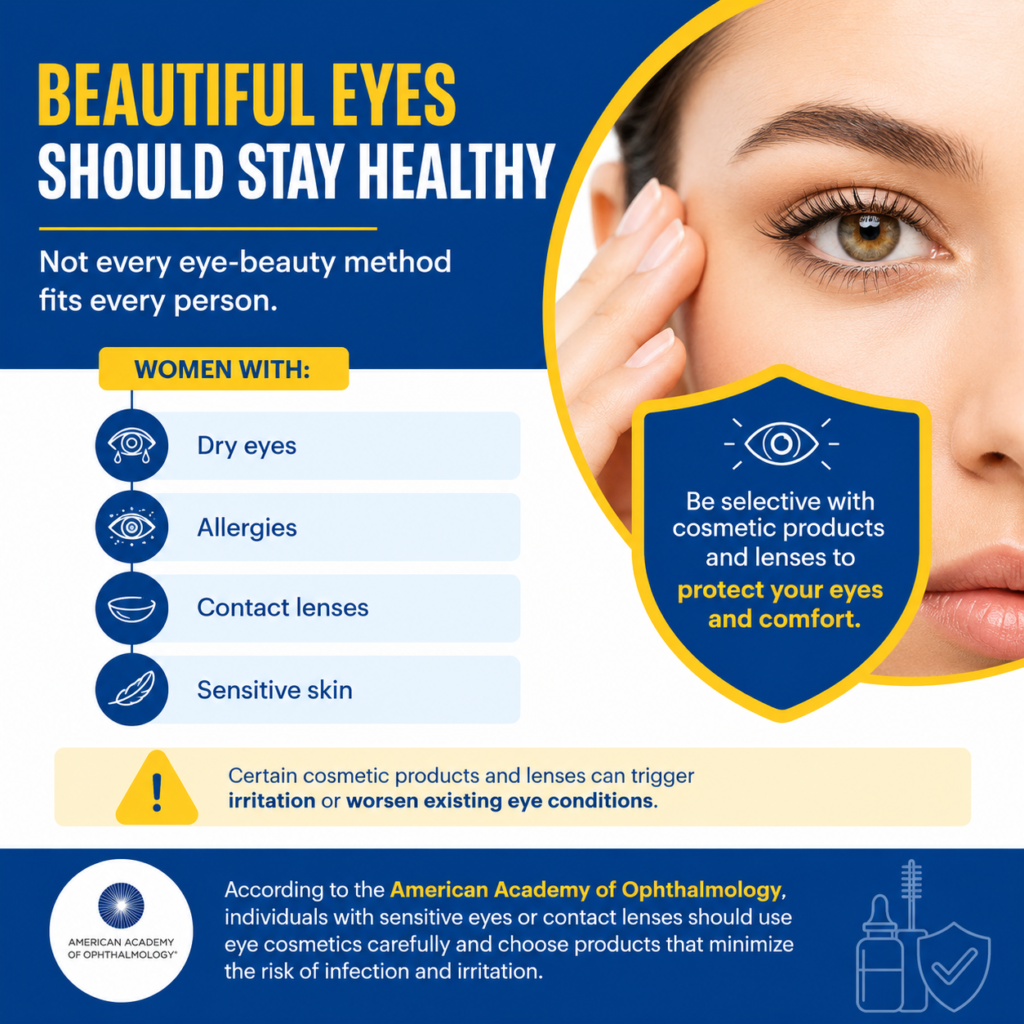
Not every eye-beauty method fits every person. Women with dry eyes, allergies, contact lenses, or sensitive skin must be especially selective, as certain cosmetic products and lenses can trigger irritation or worsen existing eye conditions. According to the American Academy of Ophthalmology, individuals with sensitive eyes or contact lenses should use eye cosmetics carefully and choose products that minimize the risk of infection and irritation
For Dry Eyes
Avoid waterproof mascara and matte shadows; they flake easily.
For Sensitive Skin
Choose fragrance-free, preservative-free, and ophthalmologist-approved products.
For Those Who Wear Lenses
Use daily disposable lenses and avoid heavy powder fallout.
For Frequent Makeup Users
Choose products that are easy to remove without rubbing.
For Those Who Prefer Cosmetic Procedures
Pick licensed professionals and ask about ingredient lists.
Selecting wisely prevents future complications and supports long-term eye health.
How to Put These Choices Into Practice
Here is a safe, actionable daily routine:
1. Before Applying Makeup
- Clean eyelids with a gentle lid cleanser
- Use lubricating drops if your eyes feel dry
- Ensure applicators are clean
2. During Makeup Application
- Apply products on the lash line, not inside it
- Use minimal product on lower lashes
- Choose cream-based formulas for less fallout
3. During the Day
- Avoid rubbing your eyes
- If particles irritate the eye, rinse with lubricating drops
4. After the Day
- Remove makeup every night using a gentle remover
- Follow with warm compresses twice weekly
- Keep brushes sanitized weekly
This is a routine my patients follow with excellent results, clear, comfortable, and beautiful eyes.
How to Evaluate Whether Your Routine Is Safe
To know whether your beauty routine is truly eye safe, regularly assess:
1. Comfort
Are your eyes burning, stinging, or feeling heavy after makeup?
2. Vision
Does makeup cause blurriness or watery eyes?
3. Eyelid Skin
Check for redness, flaking, or swelling.
4. Lashes and Glands
Observe:
- Lash shedding
- White flakes
- Styes
- Bumps on the eyelid
5. Lens Comfort (If Applicable)
If lenses feel sticky, dry, or blurry after makeup, products are likely contaminating the surface.
6. Frequency of Irritation
Any eye symptoms occurring more than twice a month indicate that part of the routine needs review.
Regular evaluation ensures that your beauty routine evolves with your eye health needs.
Conclusion
Balancing eye beauty and eye safety is not about giving up cosmetics or enhancements—it’s about using smarter, safer methods that respect the delicate anatomy of the eye. With the right knowledge, techniques, and product choices, you can enjoy brighter, more defined eyes without irritation, infection, or long-term damage.
The most important principles to remember are:
- Choose ophthalmologist-tested, gentle cosmetics
- Avoid practices that clog glands or irritate the cornea
- Maintain excellent eye and eyelid hygiene
- Always remove makeup thoroughly
- Evaluate your routine regularly for early signs of eye stress
When beauty and eye health work together, you get the best of both worlds, confident aesthetics and comfortable vision.